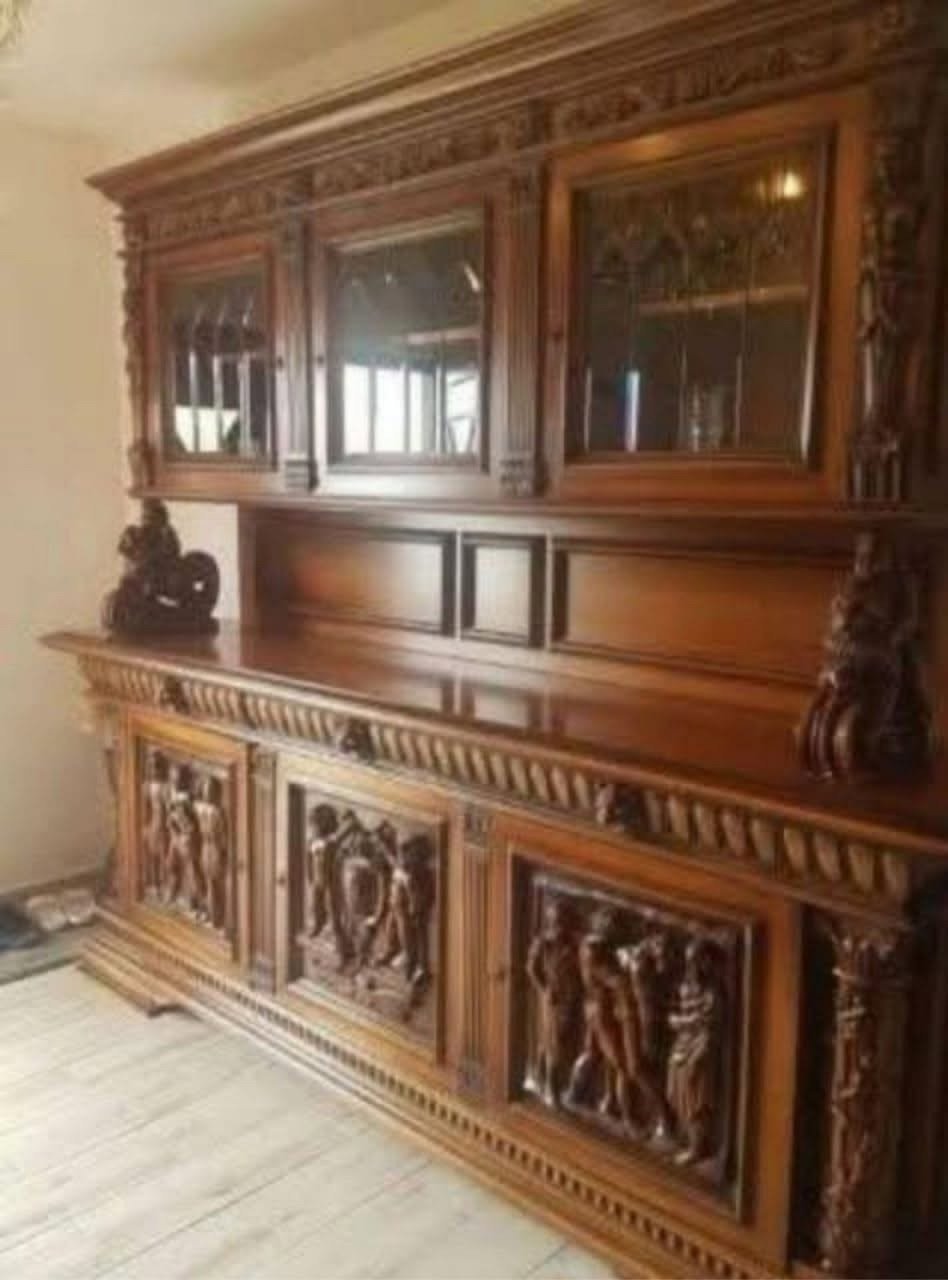
A solid wood vintage dresser hutch with classic lines and natural character can spark a creative design debate. Transforming this furniture piece with a coat of deep red paint creates a bold, confident statement, while preserving the raw wood grain honors its original history. Through thoughtful design compromises, both perspectives can be integrated to elevate the room’s aesthetic.
🎨 Design Analysis: Natural Timber vs. Crimson Focal Point
Perspective Comparison
| Design Focus | Visual Impact | Psychological & Emotional Effect | Best Architectural Pairing |
| Deep Crimson Paint | Creates a high-contrast, custom focal point that highlights structural lines. | Evokes warmth, sophistication, confidence, and vintage character. | Neutral wall palettes, brass hardware, textured natural linens, and modern spaces. |
| Raw Natural Timber | Preserves organic wood grain patterns and the authentic patina of the piece. | Promotes a grounded, timeless, cozy, and earth-toned atmosphere. | Exposed brick, rustic farmhouse interiors, muted earth tones, and traditional decor. |
🖌️ Color Palette Profiles
-
Barn Red: A warm, earthy shade with undertones of brown and terra cotta. Ideal for rustic, farmhouse, or casual living environments.
-
Cherry Red: A bright, saturated hue with mid-century vintage appeal. Best utilized as an energetic accent in eclectic or retro spaces.
-
Deep Crimson / Oxblood: A rich, moody tone with burgundy and dark berry undertones. Delivers an elegant, high-end feel in traditional or transitional interiors.
🤝 Creative Design Compromises
-
The Peek-a-Boo Interior: Retain the natural, polished wood on the exterior frame, drawers, and doors, but paint the interior backing board or display shelves in deep red. This provides a subtle pop of color when viewing stored china or books.
-
The Two-Tone Split: Keep the structural wooden frame raw or stained while painting only the drawer fronts or cabinet doors red (or vice versa) to balance warm timber with bold color.
-
Hardware & Textile Accents: Leave the hutch fully unpainted, but incorporate red through vintage ceramic or enamel hardware, aged velvet runners, or curated ceramic displays inside the glass cabinets.
-
The Reversible Sample Test: Apply a removable red paint sample or colored peel-and-stick backing paper to a small interior section or board to evaluate how the pigment reacts under room lighting before applying permanent finish.
🛠️ Step-by-Step Execution Guidelines for Painting Vintage Wood:
LOOK NEXT PAGE DEAR──►
For Complete Cooking STEPS Please Head On Over To Next Page Or Open button (>)

Sugar Free Condensed Milk 3 Ingredients

Most People Don’t Realize This, but the Color of Chicken Actually Tells You a Lot

How to Pick a Perfectly Sweet Watermelon: Easy Tips at a Glance

Caramel Cream Cake

Pour evaporated milk over beef round steak, with 2 other ingredients, into slow cooker for a rich pasta meal that disappears faster than anything else I make