They are one of the better plant sources of ALA, or alpha-linolenic acid.
Your body can convert ALA into EPA and DHA, but the conversion is limited.
So walnuts shouldn’t necessarily be considered a direct substitute for fatty fish in every nutritional context.
Nevertheless, ALA is an essential fatty acid, meaning your body needs it from your diet.
Including walnuts alongside other plant foods, seeds, legumes, whole grains, and vegetables can contribute to a diverse and nutrient-rich diet.
For people who eat little or no fish, walnuts can be a particularly convenient way to increase dietary ALA.
5. Your Diet Gets More Nutrient-Dense
Walnuts are small, but they’re nutritionally concentrated.
They provide nutrients including:
Magnesium
Copper
Manganese
Phosphorus
Fiber
Protein
Unsaturated fats
ALA omega-3 fatty acid
Various plant compounds
This is one reason portion size matters.
Because walnuts are nutrient-dense, a relatively small serving can provide a meaningful amount of nutrition.
You don’t need to eat a bowlful.
A common practical serving is around 1 ounce (28 grams), which is roughly a small handful.
That amount is also easier to incorporate into a balanced diet without allowing the calories to get out of hand.
Try adding them to oatmeal, plain yogurt, salads, roasted vegetables, or whole-grain cereal.
You can even keep a small container at work for a convenient snack.
6. Your Brain Gets Healthy Fats and Plant Compounds
The brain is an incredibly energy-intensive organ, and dietary patterns can influence overall brain and cognitive health.
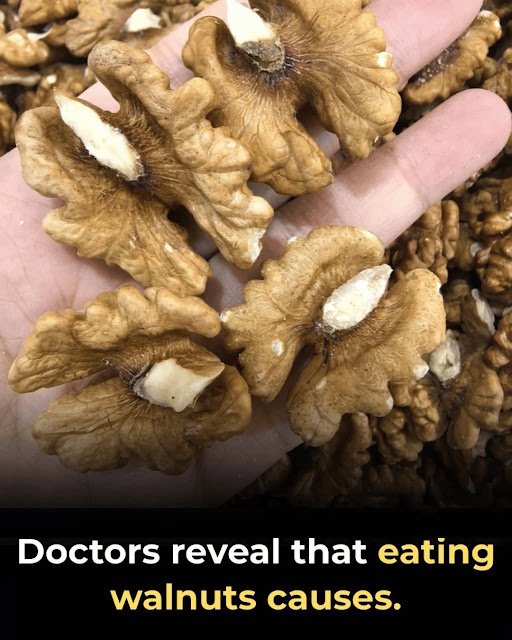
Walnuts have developed a reputation as a “brain food,” partly because their shape resembles a brain and partly because they contain omega-3 ALA, polyphenols, vitamin E, and other compounds.
But it’s important not to turn that reputation into an exaggerated promise.
Eating walnuts doesn’t automatically make you smarter.
It doesn’t guarantee better memory.
And there isn’t enough evidence to say that walnuts alone can prevent neurological disease.
What we can say is that walnuts fit well into dietary patterns associated with overall cardiovascular and metabolic health, and those factors are relevant to brain health as well.
Some research has explored whether walnuts may influence cognitive function, but findings are not strong enough to treat walnuts as a cure or prevention strategy for cognitive disorders.
So enjoy them for what they are: a nutritious food that can be part of a brain-supportive dietary pattern.
7. Your Blood Sugar Response May Benefit From Better Food Choices
Walnuts contain relatively little carbohydrate compared with many conventional snack foods.
They also contain fat, protein, and fiber.
As a result, eating walnuts instead of refined carbohydrate-heavy snacks may produce a different effect on blood glucose.
This distinction is important.
If you eat walnuts alongside a meal containing carbohydrates, the overall composition of that meal matters.
For someone trying to improve blood-sugar management, replacing sugary snacks with nutrient-dense foods can be a useful dietary strategy.
However, walnuts are not a treatment for diabetes.
People with diabetes or other metabolic conditions should consider their overall dietary pattern, medications, activity level, and individual nutritional needs.
And remember that flavored walnuts can contain added sugar or excessive salt.
Plain or lightly seasoned varieties are usually the simplest choice.
8. You May Give Your Meals a Nutritional Upgrade
One of the easiest ways to eat healthier is not necessarily to overhaul your entire diet.
Instead, make small upgrades.
Take oatmeal.
Oatmeal by itself can be nutritious, but adding walnuts gives it additional healthy fats, protein, fiber, and texture.
Take a salad.
Adding walnuts can make it more satisfying and provide a pleasant crunch.
Take plain yogurt.
Walnuts and berries can turn it into a more substantial snack.
This is where walnuts become especially practical.
They don’t require cooking.
They don’t spoil quickly when stored properly.
They’re portable.
And they can be added to countless meals.
Healthy eating becomes easier when nutritious foods are convenient.
9. Your Overall Diet May Become More Mediterranean-Style
Walnuts are common in several dietary patterns that emphasize plant foods, healthy fats, whole grains, legumes, fruits, and vegetables.
The Mediterranean-style approach is one example.
The important lesson isn’t “eat walnuts because walnuts are magical.”
It’s:
Build meals around minimally processed foods and healthy sources of fat.
Walnuts can play a small but useful role in that pattern.
Imagine a day that includes oatmeal with walnuts and berries for breakfast, lentil soup and a vegetable salad for lunch, fruit and yogurt for a snack, and fish or beans with vegetables and whole grains for dinner.
The walnuts aren’t doing everything.
For Complete Cooking STEPS Please Head On Over To Next Page Or Open button (>)