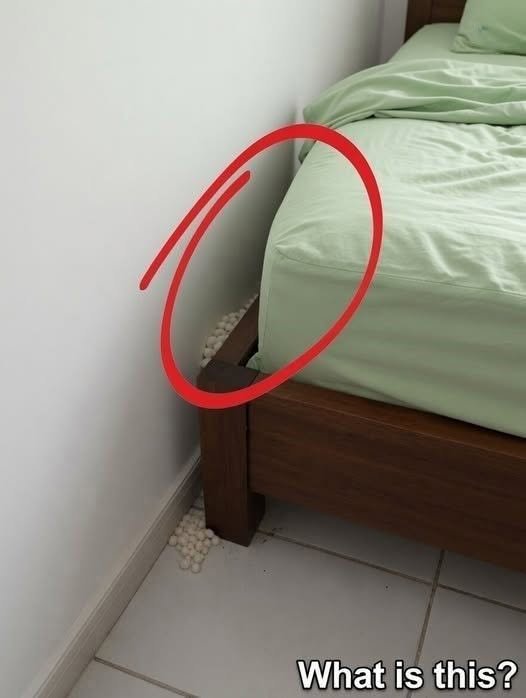
Another important factor is protection from disturbance. Lizards instinctively seek hidden places where predators are unlikely to find their eggs. The narrow space between a bed frame and a wall can provide exactly that kind of shelter. It is dark, enclosed, and often difficult for larger animals to reach. Since many people rarely inspect these hidden gaps, a lizard may view them as relatively safe nesting locations.
Darkness also plays a role. Lizards generally avoid laying eggs in bright, exposed areas. Direct sunlight can overheat eggs, while open spaces increase the risk of predation. The shaded area behind a bed remains dark for most of the day. This darkness may make the location seem ideal from the lizard’s perspective.
Humidity can be another contributing factor. Reptile eggs require a certain amount of moisture to develop properly. Excessively dry environments can cause eggs to lose water and fail to hatch. The area behind furniture sometimes traps a small amount of moisture and experiences less airflow than open parts of a room. This slightly more humid environment may help protect eggs from drying out.
A female lizard may also return to a location if it has been used successfully before. Some species exhibit what scientists call communal nesting behavior. This means multiple females may deposit eggs in the same protected location over time. If a hidden area behind a bed has previously served as a successful nesting site, future lizards may continue using it.
Food availability may indirectly contribute as well. Lizards often stay near places where insects are common. Bedrooms can attract insects drawn to lights, clothing, dust, or small food particles. If a female lizard already spends much of her time near the bedroom because prey is available, she may eventually choose a nesting site nearby.
For Complete Cooking STEPS Please Head On Over To Next Page Or Open button (>)