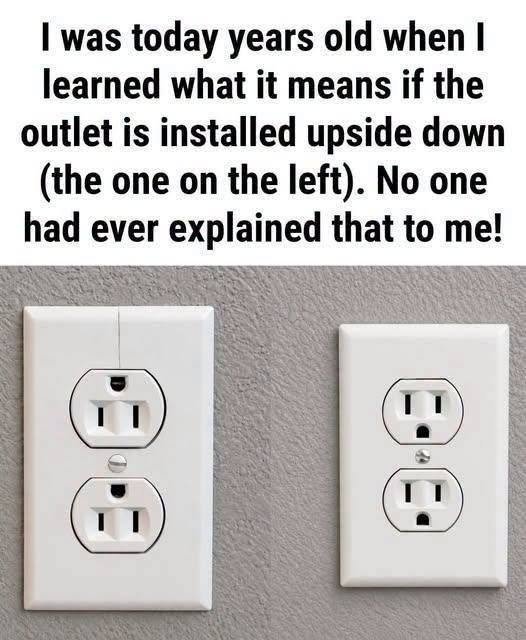
📋 Code Compliance & Installation Verdict
-
Code Status: Both vertical orientations are fully compliant with electrical standards. The orientation does not alter voltage, amperage, or ground fault protection.
-
Why Ground-Down Remains Common: Ground-down installation persists in residential architecture primarily due to aesthetic convention, ergonomic familiarity, and matching the face-like appearance standard in residential construction.
For Complete Cooking STEPS Please Head On Over To Next Page Or Open button (>)

Sugar Free Condensed Milk 3 Ingredients

Most People Don’t Realize This, but the Color of Chicken Actually Tells You a Lot

How to Pick a Perfectly Sweet Watermelon: Easy Tips at a Glance

Caramel Cream Cake

Pour evaporated milk over beef round steak, with 2 other ingredients, into slow cooker for a rich pasta meal that disappears faster than anything else I make