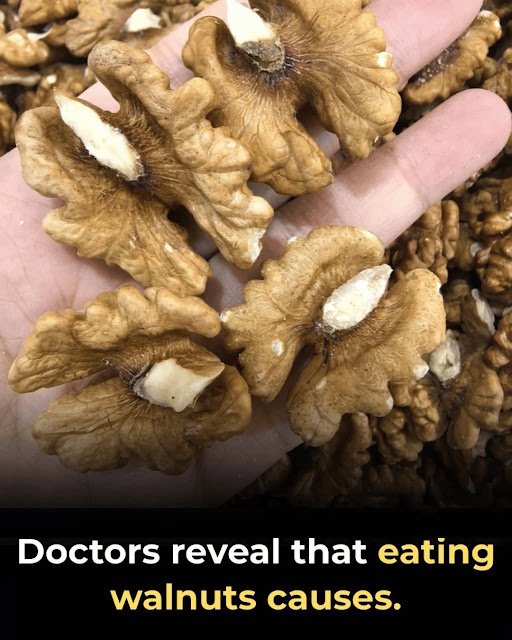
What Happens When You Eat Walnuts Every Day…See more
Absolutely — here’s a long-form, engaging health blog post designed around the curiosity-driven “What Happens When You Eat Walnuts Every Day…” headline, while keeping the claims grounded and practical.
What Happens When You Eat Walnuts Every Day? 10 Surprising Changes Your Body May Notice
What happens when you eat walnuts every day?
At first, probably nothing dramatic.
You eat a small handful with breakfast, sprinkle some over oatmeal, add them to a salad, or simply grab a few when you’re hungry in the afternoon.
But beneath that simple routine is an impressive combination of nutrients.
Walnuts contain healthy unsaturated fats, plant-based protein, fiber, vitamins, minerals, and antioxidant compounds. They’re especially notable because they provide a substantial amount of alpha-linolenic acid (ALA), a plant-based omega-3 fatty acid.
That doesn’t mean walnuts are a miracle food.
They won’t magically erase years of unhealthy eating, cause effortless weight loss, or prevent every disease. But when they replace less nutritious snacks and are eaten as part of an overall balanced diet, walnuts can contribute to several aspects of good health.
So what might happen if you eat them every day?
Let’s take a closer look.
1. Your Heart May Get Some Extra Support
One of the best-known reasons to include walnuts in your diet is their potential benefit for cardiovascular health.
Walnuts are rich in polyunsaturated fats, including ALA. They also contain compounds such as polyphenols that have antioxidant properties.
A heart-healthy diet isn’t about one particular food. Instead, it is about the overall pattern of what you eat.
Replacing foods high in saturated fats or highly processed snacks with a modest serving of walnuts can improve the nutritional quality of your diet.
Research on nuts more broadly has associated regular nut consumption with better cardiovascular outcomes. Walnuts have received particular attention because of their fatty-acid profile.
Some studies have found that eating walnuts can improve certain blood lipid measures, including LDL cholesterol, although individual results vary.
The important word here is replace.
Adding a large amount of walnuts on top of an already calorie-heavy diet isn’t necessarily beneficial.
Swapping cookies, chips, or other highly processed snacks for a small serving of walnuts is a much smarter strategy.
Think of walnuts as an upgrade rather than a magic ingredient.
2. You May Feel Fuller Between Meals
If you’re constantly hungry an hour or two after eating, walnuts may be useful.
They’re relatively calorie-dense, but they also contain fat, protein, and fiber — three nutrients that can help make a snack more satisfying.
For example, compare these two afternoon snacks:
A handful of highly processed crackers may be easy to eat quickly and may leave you wanting more.
A modest serving of walnuts paired with fruit or yogurt provides a combination of fat, protein, fiber, and other nutrients.
That combination can help you feel satisfied for longer.
This doesn’t mean walnuts automatically cause weight loss.
They contain plenty of calories, so portion size still matters.
But interestingly, research on nuts suggests that regular nut consumption doesn’t necessarily lead to weight gain and may fit comfortably into healthy weight-management patterns.
One reason may be that nuts are filling enough to reduce the desire to eat other foods later.
Another possibility is that not all of the calories in whole nuts are absorbed because some remain trapped within the nut’s cellular structure.
Still, a handful is very different from eating half a bag while watching television.
Your portion matters.
3. Your Gut May Appreciate Them
Your digestive system is home to trillions of microorganisms.
This community, often called the gut microbiome, interacts with the food you eat.
Walnuts contain fiber and plant compounds that may influence this environment.
In research studies, walnut consumption has been associated with changes in gut bacteria and microbial metabolites.
That doesn’t mean walnuts will “detox” your intestines or instantly repair your gut.
Your microbiome is influenced by your entire diet, physical activity, sleep, medications, stress, and many other factors.
Still, regularly eating a variety of plant foods — including nuts — is generally a good way to provide your digestive system with different types of dietary fiber and plant compounds.
If you’re not accustomed to eating much fiber, however, suddenly eating large quantities of walnuts could cause bloating or digestive discomfort.
Start small.
A modest serving is usually more sensible than dramatically increasing your intake overnight.
4. You Get a Plant-Based Source of Omega-3 Fat
When people hear “omega-3,” they often think of fish.
That’s understandable because fatty fish such as salmon are rich in EPA and DHA, two important omega-3 fatty acids.
Walnuts are different.
For Complete Cooking STEPS Please Head On Over To Next Page Or Open button (>)