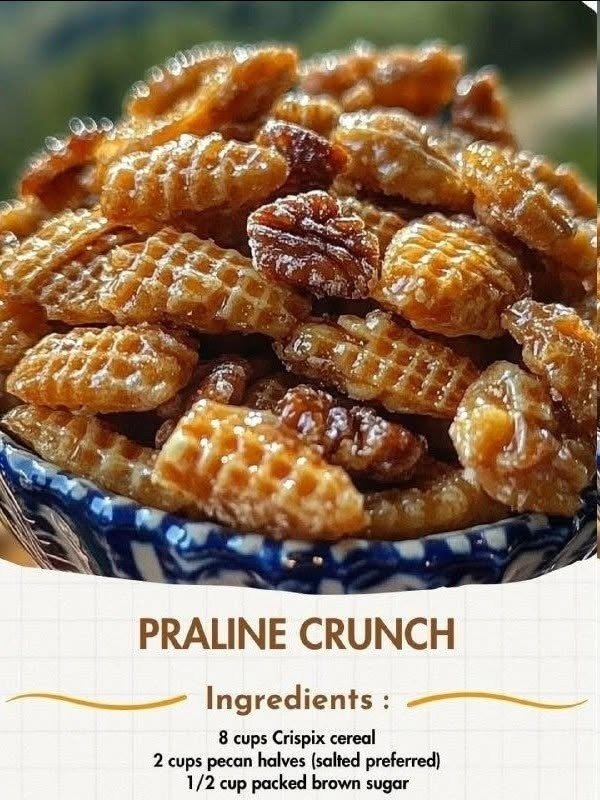
Praline Crunch is a sweet, caramelized snack mix that combines cereal and pecans into a gourmet confection. Enrobing Crispix cereal and buttery pecan halves in a boiled brown sugar glaze delivers the classic flavor profile of Southern pralines with a satisfying crunch.
Baking the mix at a low temperature dries the coating, creating a light, aerated candy shell that stays crisp for weeks without becoming sticky or tough.
Equipment & Ingredients
Component Breakdown
| Section | Ingredient | Quantity | Functional & Culinary Role |
| Crunchy Base | Crispix cereal | 8 cups | Dual-grain grid cereal that holds glaze in its crevices. |
| Pecan halves | 2 cups | Essential high-lipid tree nut for authentic praline flavor. | |
| Aerated Praline Glaze | Light brown sugar | 1 cup, packed | Molasses foundation providing caramel sweetness. |
| Light corn syrup | ½ cup (120ml) | Glucose source that prevents sugar crystallization. | |
| Unsalted butter | ½ cup (1 stick / 115g) | Rich lipid base for the caramel glaze. | |
| Baking soda | ¼ tsp | Chemical leavening agent that aerates the hot syrup. | |
| Pure vanilla extract | 1 tsp | Primary aromatic enhancer. |
🧪 Food Science: Non-Crystalline Glazes & Chemical Aeration
-
The Non-Crystalline Caramel Shield: Sucrose (found in brown sugar) naturally re-crystallizes into hard, grainy structures when boiled and cooled. Introducing light corn syrup (glucose) prevents this: long-chain glucose molecules physically interfere with sucrose crystals, forcing the glaze to set into a smooth, glossy, uniform glass-like coating instead of a gritty sugar paste.
-
Baking Soda Foaming Reaction: Stirring baking soda (sodium bicarbonate) into the hot, acidic brown sugar and butter reduction triggers an immediate acid-base reaction. Thermal heat releases carbon dioxide ($\text{CO}_2$) gas bubbles inside the heavy syrup, causing the mixture to foam and expand. When poured over the cereal, these micro-bubbles create a thin, aerated structural wall rather than a solid candy shell, yielding a delicate snap.
-
Low-Temperature Moisture Evaporation: Baking the coated mix at a low $250^\circ\text{F}$ ($120^\circ\text{C}$) drives off remaining free water molecules without scorching milk solids in the butter or over-cooking the sugars. This ensures the praline coating hardens into a crisp, non-sticky glaze that seals the cereal against atmospheric humidity.
Step-by-Step Instructions:
LOOK NEXT PAGE DEAR──►
For Complete Cooking STEPS Please Head On Over To Next Page Or Open button (>)
Sugar Free Condensed Milk 3 Ingredients

Most People Don’t Realize This, but the Color of Chicken Actually Tells You a Lot
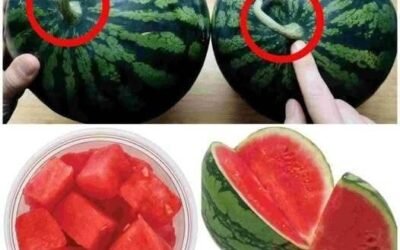
How to Pick a Perfectly Sweet Watermelon: Easy Tips at a Glance
Caramel Cream Cake

Pour evaporated milk over beef round steak, with 2 other ingredients, into slow cooker for a rich pasta meal that disappears faster than anything else I make