1. Smell
Fresh ham should smell:
Mild
Slightly salty or smoky
If it smells:
Sour
Rotten
Like ammonia
Throw it out.
2. Texture
Good ham:
Slightly moist
Firm but tender
Bad ham:
Slimy
Sticky
Excessively mushy
3. Expiration Date
Always check:
Light reflection
Protein structure
Moisture levels
Aging processes
…and you get a product that doesn’t always look “perfect,” even when it’s completely safe.
In fact, some of the “strangest” marks are actually signs of traditional preparation methods or high-quality curing.
When to Trust Your Instincts
Here’s a simple rule that cuts through all the confusion:
If something about the ham makes you hesitate—really hesitate—it’s okay to throw it away.
Food safety isn’t the place to take risks.
A few dollars’ worth of ham isn’t worth the possibility of foodborne illness.
Final Thoughts
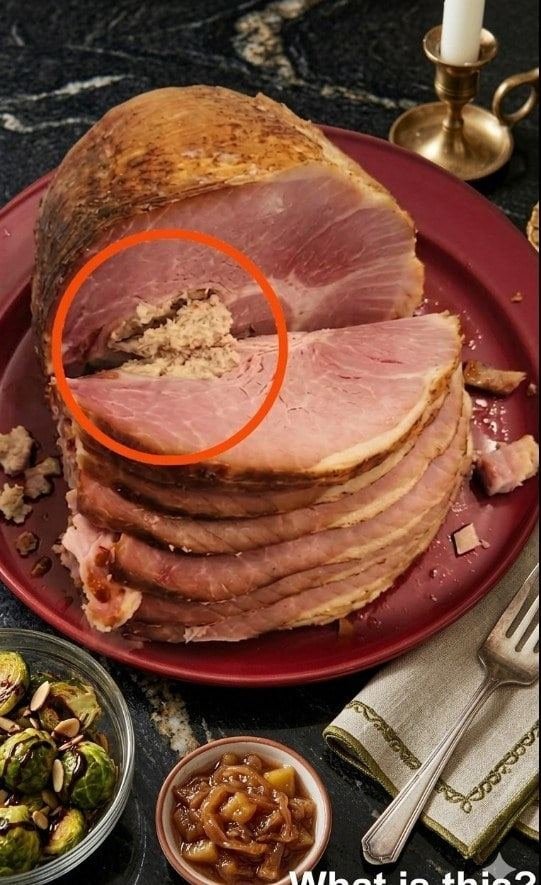
Strange marks on ham can be surprising, even unsettling—but most of the time, they’re completely harmless.
A rainbow sheen? Normal.
White crystals? Fine.
Minor dark spots? Usually okay.
But when you see slime, mold, or strong discoloration paired with a bad smell—that’s your cue to toss it.
The key is knowing the difference between natural variations and warning signs.
Because once you do, that moment of uncertainty in your kitchen becomes a lot less stressful—and a lot more manageable